 Many Americans are hearing the name, Svalbard for the first time. The Norwegian government, working with the Global Crop Diversity Trust opened today the Svalbard Global Seed Vault. This structure, on an island well-inside the Arctic Circle, is a safe and very cold place to store representative samples of crop seed from all over the world.
The media, as they are wont to do, have dubbed this “The Doomsday Vault”, conjuring images of Hollywood disaster movies, wherein the human race (represented by hapless but stylish young people) fends off asteroids, comets, killer viruses, and occasionally aliens. This sensationalism belittles the importance and the project and the present threats to our food stocks. The project will have more immediate and pragmatic uses than repopulating the Earth in the aftermath of bionic space-zombies.
Many are unaware that the majority of our produce- everything from apples to zucchini- are grown from a decreasing number of strains. Even a hundred years ago, the produce in a local farm stand would likely have been different from the produce in a farm stand fifty miles away. New strains are bred (and engineered) for a variety of reasons. Some produce a greater yield per acre, some resist specific pests, or in some cases, crops are bred to look good on a shelf after a long trip. While there are undeniable benefits to some of these changes, we as a society seem again to be ignoring some of the long term implications of these decisions.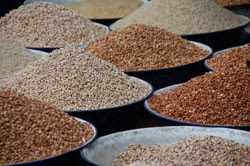 Among these implications are the creation of a genetic bottleneck as a small number of breeds begin to predominate; the loss of some of our historical and cultural fabric as unique and sometimes storied stocks are mothballed; and a dwindling number of choices at the supermarket.
The Svalbard project is insurance against ongoing shortage resulting from the genetic bottleneck we’re creating, from climate change, and from other humanmade and natural problems. But, government is not the only solution. The reader can be part of a similar biological archive by making some simple choices. Favoring in-season crops, buying from local farmers’ markets, and raising a garden from heirloom seed are inexpensive ways to support local crop strains, biodiversity, and a culinary legacy.
Image source: Ministry of Agriculture and Food, Norway
Post script: "Heirloom seed" sounds expensive, but it generally isn’t. In fact, many people give it away. For those readers interested in getting some heirloom seed of their very own, I provide links to some dealers and resources. You can also probably find sources at local garden clubs, and can certainly find other dealers on the Web:
Southern Exposure Seed Exchange (This is where ERD shops)
Baker Creek Heirloom Seeds
Native Seeds
Showing posts with label heirloom seed. Show all posts
Showing posts with label heirloom seed. Show all posts
Tuesday, February 26, 2008
Frozen Food Isle


Subscribe to:
Posts (Atom)
